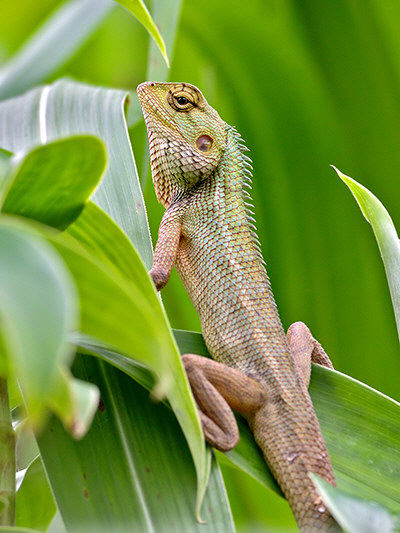
Fig 1
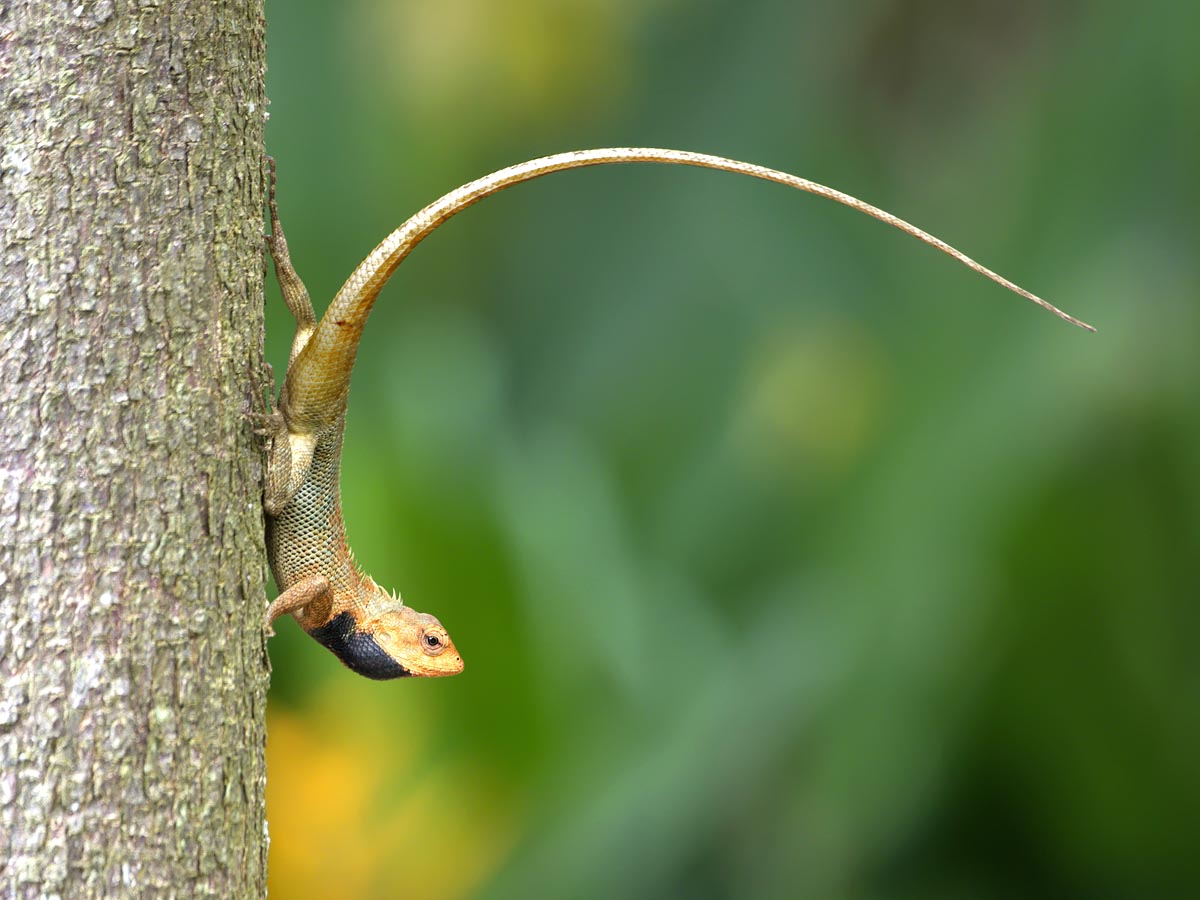
Fig 2
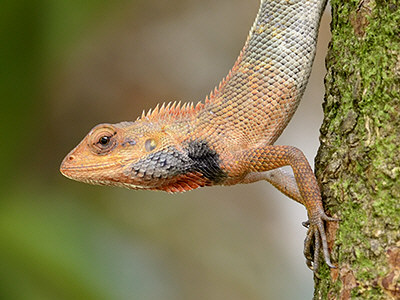
Fig 3
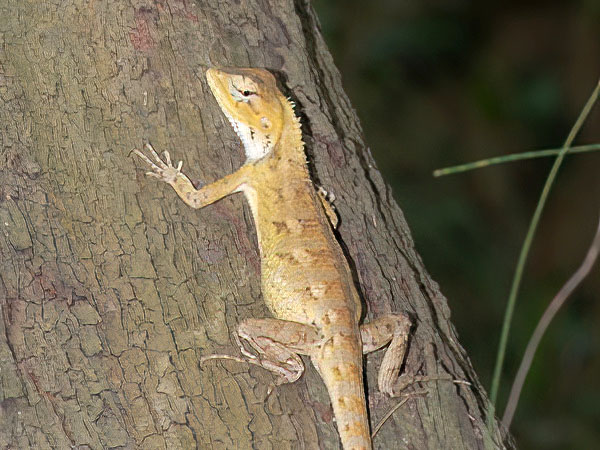
Fig 4
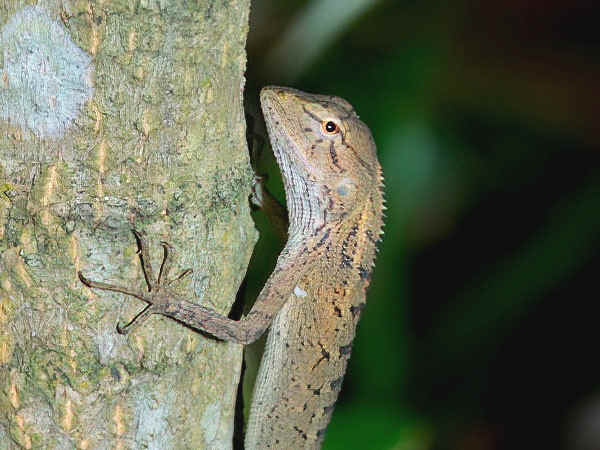
Fig 5
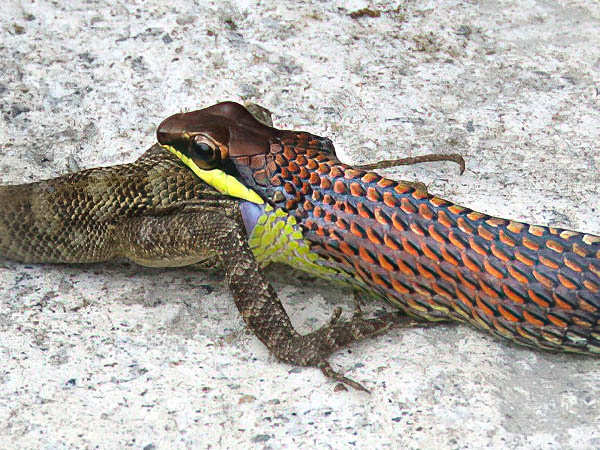
Fig 6
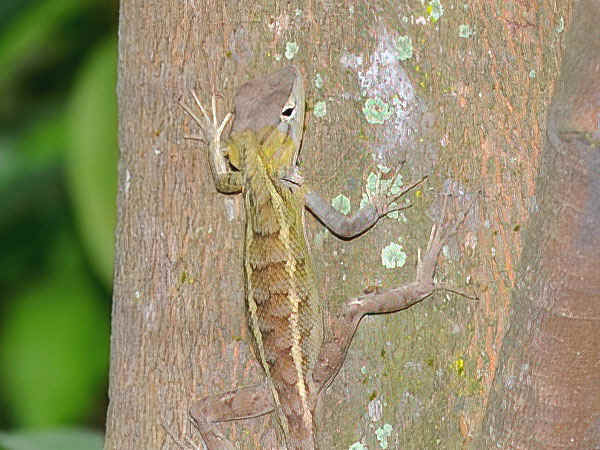
Fig 7
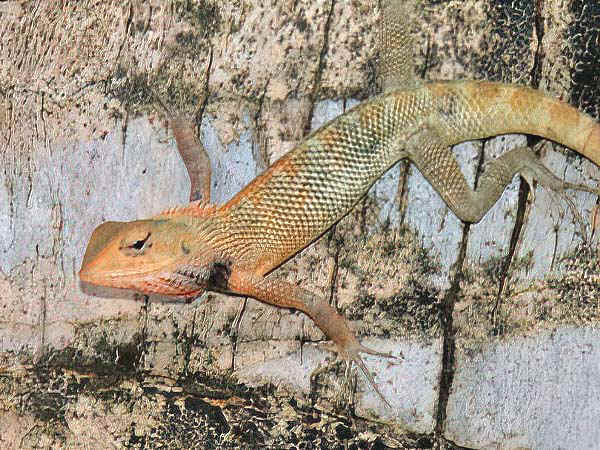
Fig 8
|
Family : AGAMIDAE
Species : Calotes sp.
Size (snout to vent) :
Females to 93 mm, males to 98 mm (Law et al, 2025). Presented
here are images of Calotes lizards from different parts of Singapore.
These lizards are easily found sunning themselves
on low vegetation and on fences in parks and gardens and in forest-edge
settings. Calotes lizards do not occur in the mature forests in the
interior of the country, except for forest-edge settings.
Prior to the early 1980's there were no Calotes lizards of any type
in Singapore. However, by the mid 1980's it was apparent that some Calotes
had arrived in the country and were rapidly establishing themselves. These lizards were identified as Calotes
versicolor, and were known locally as changeable lizards. (Baker
& Lim, 2012).
It was assumed that their progenitors were unwittingly
imported into Singapore by rail or sea
from northern Peninsular Malaysia or Thailand (Figueroa et al, 2023), but there is a chance that
some had come from further afield, for example from India.
It is also likely that in later years Calotes versicolor, or the form in Thailand that is now called Calotes
thailandensis (Prakobarn et al, 2026) also spread down through
Peninsular Malaysia overland, by successfully
establishing itself in widespread anthropogenic habitats, and finally
reached Singapore.
This confusing picture could mean that both Calotes versicolor sensu
stricto (from India and elsewhere) and Calotes thailandensis could both occur in Singapore.
Further work is clearly needed to determine exactly which species of Calotes
occur in Singapore.
In the decades since the arrival of Calotes lizards in Singapore, the native range of Bronchocela
cristatella (Green Crested Lizard) has shrunk; whether
this is a consequence of the arrival of these invasive lizards is unclear.
Also included here (Figure 8) is an image of a Calotes lizard at a ferry
terminal on the island
of Bintan, to the southeast of Singapore, in the Riau Islands of
Indonesia.
Fig 1 : Adult in non-breeding colour in grassland habitat at Kranji.
Figs 2 and 3 : Male examples in typical breeding colours, with reddish-orange head and anterior
part of body, and black marking on the throat. Seen at MacRitchie and
Sembawang.
Fig 4 : Gravid female in secondary forest edge in the Portsdown area.
Fig 5 : Example in secondary forest edge in the Portsdown area.
Fig 6 : Falling prey to a Kopstein's
Bronzeback at the edge of Lentor Forest in central Singapore. This
forested area was later cut down to make way for housing.
Fig 7 : Example in secondary forest edge in the Portsdown area.
Fig 8 : Example at a ferry terminal on Bintan Island, Riau Archipelago, Indonesia.
References :
Baker, N. & K. Lim, (Vertebrate Study Group, Nature Society Singapore),
2012 (Reprint). Wild Animals Of Singapore. Draco Publishing and Distribution
Pte. Ltd.
Figueroa, A., Low, M. E., & Lim, K. K. (2023). Singapore’s
herpetofauna: updated and annotated checklist, history, conservation,
and distribution. Zootaxa, 5287(1), 1-378.
Law I.S., Law I. T., Shivaram Rasu, Serin Subaraj, Sankar
Ananthanarayanan. (2025). A Field Guide to the Reptiles and Amphibians
of Singapore. John Beaufoy Pub. Ltd. 304 pp.
Prakobkarn A, Zug GR, Tandavanitj N, Ngamprasertwong T (2026)
Systematics of the Calotes irawadi complex (Squamata, Agamidae)
with two newly described species from Thailand. ZooKeys 1281: 69–104.
|